
Pioneering Instore Retail Media in Super Masket: The Project That Sparked adooh Platform

In 2003, we were given the opportunity to deliver the first generation of a retail media advertising solution for Manor supermarket in Switzerland, one of the most recognized supermarket chains in Europe. This project marked a turning point for DGCT and laid the foundation for what would become our ADOOH platform.

What started as a simple digital signage integration evolved into a sophisticated, data-driven retail media ecosystem—built to support localised advertising, complex campaign rules, and reliable proof-of-display reporting across hundreds of devices

Transforming a Weighing Scale Into a Retail Media Surface

Manor introduced a new generation of weighing scales equipped with customer-facing digital displays. These screens represented an untapped opportunity to communicate promotions, brand messages, and contextual information directly at the point of purchase.

Our mandate included:

  • Embedding a video-capable media player into each weighing scale

  • Ensuring seamless coexistence between weighing functions and dynamic content

  • Building a backend architecture to distribute, schedule, and monitor content remotely

Globalch Media took responsibility for advertising sales, while DGCT was entrusted with the full technical and architectural design of the solution.

The collaboration ensured a smooth combination of commercial strategy and engineering excellence.

Early Challenges: Where Complexity Emerged
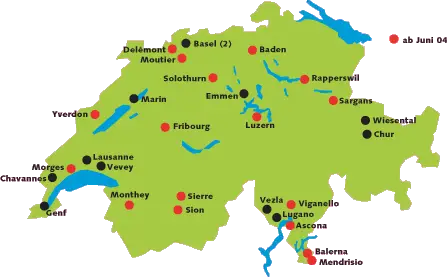
While the initial concept focused on serving just three language-based regions, real-world needs quickly revealed deeper challenges.

1. Localisation Beyond Regional Language Zones

Campaigns did not start and end simultaneously across all stores. Advertisers began requesting:

      • Store-specific scheduling
      • Localised promotions tied to inventory
      • Unique campaign durations per location

This pushed us far beyond the original model of simple region-based targeting.

2. Day-Parting and Time-Slot Management Became Essential

Brands wanted campaigns that only ran:

      • At specific hours (morning, lunch, after-work peak)
      • On selected days of the week
      • In overlapping time windows with priority rules

This level of precision required a smarter scheduling engine than initially planned.

3. Proof-of-Display Increased IT System Stress

As accountability became a requirement, the system had to support:

      • Playback verification
      • Timestamped logs
      • Audit-ready proof-of-display reports

Logs generated heavy traffic and resource usage on already constrained devices, exposing the need for a more efficient data architecture.

The Birth of the First-Generation adooh Platform

These operational pressures—localised campaigns, sophisticated time-based rules, and the need for reliable reporting—directly influenced the design of our first ADOOH platform.

The platform introduced:

      • A rule-based campaign scheduler capable of handling localisation, day-parting, and dynamic targeting
      • Lightweight, resilient device agents optimized for limited hardware resources
      • A scalable backend capable of managing logs, monitoring playback, and supporting large volumes of proof-of-display data
      • Tools enabling operators, advertisers, and partners to collaborate efficiently

What began as a single retail integration became the blueprint for our future in programmatic DOOH and retail media technology.

A Milestone That Shaped Our Vision

The Manor project helped us understand the evolving needs of modern retail media networks:

      • Real-time content agility

      • High-precision targeting

      • Transparent proof of performance

      • Efficient edge-to-cloud workflows

It also strengthened our belief that in-store digital displays—whether on weighing scales, shelf screens, or smart kiosks—can become powerful media assets when supported by the right technology.

This first deployment remains a cornerstone achievement for DGCT and continues to inspire the evolution of our adooh platform toward a smarter, more flexible, and more scalable future.
Clear Channel launches Asia’s market-firsts: near real-time impressions and AI-driven vehicle count – Quividi

DGCT is proud to have lead the deployment of this market-first’s in ASIA for ClearChannel Singapore with our partner Quividi the leading audience measurement for OOH media. A key milestone for Quividi to provide audience data to fuel Programmatic DOOH acheived here in Singapore!


Clear Channel Singapore’s programmatic service, OutSmart Pro, launched in 2020, using quarterly audience data. Today, OutSmart Pro is referencing the past week’s data, making it the closest ever to real-time impressions. This is made possible with LEXI, Clear Channel Singapore’s award-winning audience-understanding video analytics, that is jointly powered by Quividi.

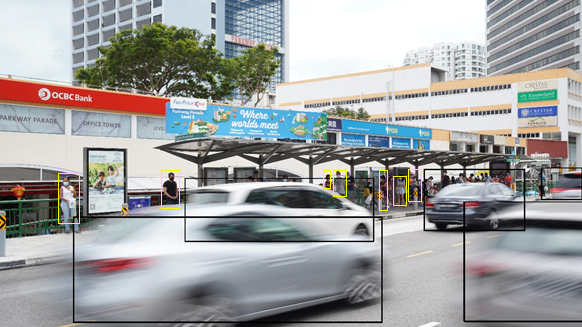
The enhanced audience measurement solution comprises of an Anonymous Video Analytics software that analyses pedestrians and vehicles to calculate impressions and dwell time in real-time, counting exactly how many people have been exposed to advertisements at specific locations, by the days of the week or by the hours of the day.
The two new algorithms offer precise estimates of 95% accuracy, enabling a high-fidelity Impression Multiplier (IM) for programmatic DOOH (pDOOH). What this means for brands is the ability to better predict their audience and offering a much higher precision in targeting.

“We continue to place significant investment to refine our programmatic service, OutSmart Pro. More brand owners are increasingly acknowledging that post-pandemic mobility presents new forms of commute and location preferences. Being able to come this close to real-time audience reflection is a huge step up. We will continue to pioneer and own the pDOOH space,” said Kelly Khoo, Chief Executive Officer, Clear Channel Singapore.

The near real-time impressions on pDOOH will include a new, and also a first in Asia –AI-driven Vehicle Count that comes with the ability to detect a distance of at least 100m. This feature can identify and differentiate a spectrum of vehicle types including buses, lorry, cars and vans.

“We are glad to further strengthen our partnership with Clear Channel Singapore, one of the most innovative OOH companies globally. Quividi’s high-fidelity data combined with Clear Channel’s LEXI and OutSmart Pro enable advanced monetisation and targeting models for DOOH, that set new benchmarks for the industry. We are also thrilled to see leading DOOH programmatic platforms such as Hivestack and Vistar Media amplify those initiatives, paving the way to a new audience measurement paradigm powered by first-party real-time data.”, says Olivier Duizabo, President Quividi.

“We are committed to driving further innovation across programmatic digital out of home (DOOH) and creating more accurate, measurable and precise opportunities within the channel. Clear Channel is a key partner for Hivestack both in the APAC market and globally and we are excited to extend this alliance.”, Matt Bushby, Managing Director SEA & ANZ at Hivestack

“Clear Channel Singapore has been a pioneer of programmatic DOOH and is solidifying its place by tapping into a near-real time audience. Vistar Media partners with innovators who are looking to bring online practices to screens in the physical world and Clear Channel is taking the next step,” said Franck Vidal, Director of Southeast Asia Sales & Partnerships at Vistar Media. “We are extremely excited to tap into Quividi’s granular metrics to bring further precision targeting to our advertisers and agencies in Singapore.”

OutSmart Pro is accessible to digital buyers using multiple DSPs (including Active Agent, Adform, Adomni, Adelphick, Adquick, Amobee, Displayce, Google DV360, Hivestack, Logicad, MarketOne, Mediamath, Neuron, Porto, Sage & Archer, Splicky, The Trade Desk, TPS Engage, Ubimo, Vistar Media and Yahoo!) and from whom they can access Clear Channel Singapore’s island-wide inventory that includes 254 digital screens, Play, and large format street-side digital billboard, Electric City, at Orchard Boulevard and Robinson Road.